The phone was shaking in my hand.
I had just checked my bank account. $22,000. For a project I built in 6 months. In a country where my father once made $1.50 a day as a blacksmith.
I called him immediately.
"Papa, I made 15 lakh rupees."
Silence. Then: "What? How?"
"The project I built. Someone bought it."
My family had called me mad when I quit my job. They said I should go to Dubai and do "real work." But I had asked for one year to prove myself.
That phone call changed everything—not just for me, but for everyone in my family who had sacrificed so I could get here.
This is the story of how I got to that call. And everything that came after.
Part One: The Foundation
The Blacksmith's Son
My name is Mohd Danish. I'm from India, born in 1992. As I write this, I'm 33 years old, married with two beautiful daughters. By 30, I had achieved things I never imagined possible: studying at a Central University, international travel, building my own house, buying a good car, owning farmland, fulfilling my parents' dreams, and making money from the internet—even while I slept.
But let me take you back to where it all started.
In 2007, everything changed. I got admission to high school—a Hindi medium government school where the fees were about 1,200 rupees (around $14) per year. For most people, that's nothing. For my father, it was a fortune.
My father was a blacksmith. He made $1 to $1.50 per day. Every rupee counted.
I finished my board exams with 49.5% marks. Not impressive, right? But here's the thing—I got 80 marks in math. I was good with calculations. Based on my marks and a small interview, I ended up in the science stream: Physics, Chemistry, and Math.
Around this time, my father made a decision that would shape our family's future. Instead of continuing the backbreaking blacksmith work, he decided to set up a small retail shop. He would buy ready-made goods on credit from the market and sell them at a profit.
This decision fascinated me. After school, I would rush to the shop and learn the art of selling. Talking to customers. Understanding their needs. And the magic of buying something for one rupee and selling it for two.
We started making good profits—around $10-$15 per day. My mother ran the entire household on just $2 per day. She was incredible—tracking our school homework, our clothes, everything. My father would give her $2 each morning, and she made it work.
After the shop closed each evening, I would go home and study. My father always reminded me: "Focus on your studies too."
In 2009, I took my Intermediate exams. First division. 64% marks. My father distributed sweets in the market. Everyone was excited. Finally, something to celebrate.
The Language Barrier
Now came the hard part.
All my friends were getting into engineering colleges—some private, some government. I couldn't clear the government entrance exams, and I had no money for private colleges.
Someone suggested coaching classes. So I joined one where the teacher lectured entirely in English.
You need to understand something: I came from a Hindi medium background. For the first two months, I couldn't understand a single word. I learned English by listening to lectures I couldn't comprehend and watching English TV at home.
But I still couldn't crack the engineering exam. Coming from Hindi medium and giving competitive exams in English—it was like running a race with weights tied to my feet.
I tried again the next year. This time, I couldn't even afford coaching fees, so I studied on my own using previous notes.
Still no luck with engineering.
Then someone gave me advice that changed everything: "Apply for non-engineering courses too."
I applied for a Bachelor of Computer Science program. The entrance test was much easier than engineering, and there wasn't much demand for it at the time. I ended up in the top 10.
Falling in Love with Computers
In 2011, I took admission in a computer course that nobody was excited about. Everyone wanted engineering because it led to high-paying jobs.
But I accepted what I had: admission to a Central University backed by the government. Even better—I was getting a scholarship each year. This was already a win.
On my first day, I walked into the department and saw something that changed my life: a room with 90 computers and fast, free internet. I had never seen anything like it. I set up my first Facebook account that day.
I fell in love with those computers.
I started bunking classes to use the lab. I would browse movie websites, download films, and watch them with friends in the hostel. I became so good at finding free downloads that my friends started calling me "Downloader."
My first year of graduation? I spent it learning every method of downloading stuff from the internet. I passed with above 50% marks and was happy. More importantly, I had discovered something I genuinely enjoyed.
For three years, I used my university as a resource to build myself. Free hostel. Library. Network. Friends. $400 scholarship each year. By 2012, I stopped taking money from home. I started tutoring children in math for $30 per month—enough for daily expenses and a weekly party with friends.
The Movies Side Business
In my final year (2013-2014), I went deeper into the movies ecosystem. I built websites that provided fast download links. And I made good money doing it.
While working on these movie websites, I discovered something interesting: I enjoyed designing pages with CSS. So I started experimenting, making my movie sites look better.
As graduation was ending, most friends were taking job offers. But my friend (I call him my mentor) and I had gotten comfortable with university life—unlimited free internet, free hostel, scholarship, and mess food for just $10 per month.
We decided to continue. Both of us got into a 3-year Master's program in Computer Application in 2014.
New course, new ambition. This time, I decided I needed my own laptop. My grandfather's brother, who lived in London, saw potential in me. He sponsored an ASUS AMD laptop for $380. It was a beast for me.
Now I had my own computer, 24/7.
From Movies to GitHub
In 2014, I decided to stop all the movie projects and build something different.
I discovered GitHub.com and fell in love with all those public repositories. What excited me most was the combination of public APIs and designing pages.
I built a small search engine using GitHub's public APIs—you could find repositories by keyword or programming language. I built it with Angular 1.6, which became my first love in programming. It was so easy to build dynamic apps, especially for someone like me who wasn't good with jQuery or custom JavaScript.
In 2015, I shared this project in a Slack community. A founder from a US company liked the design and DMed me: "Wanna work with us?"
I was shocked. Someone from the US was offering me an opportunity to work and get paid $3.50 per hour.
$3.50 per hour. This was my first dollar earning, and it felt like a fortune.
I started working with them, making $500+ per month. After 4 months, they raised my rate to $8 per hour. I was making $1,200+ per month, working 3-5 hours daily while still studying and learning new design skills.
By 2016, they raised my rate to $18 per hour. I worked with them for about 1 year and 8 months. The money helped my family—my sisters' and brother's marriages, household expenses, everything.
The Failed Job Hunt
In late 2016, my contract ended and my Master's degree was finishing. I had no pressure to make money immediately—I had saved enough. So I started thinking about my next step: getting a good job at a company.
Good companies came to campus to hire. I applied. And I got rejected.
The reason? I couldn't answer their algorithm questions. I was good at designing web pages. They were asking about bubble sort and complex textbook algorithms.
I didn't get a single job offer.
Around this time, I had joined Twitter in 2014 but hadn't used it actively. In 2017, I started using it more and discovered Pieter Levels—the idea of traveling the world while working on your own projects. I loved the concept of nomadlist.com and started following more people like him.
Nobody in India was doing this yet. But I loved the idea of traveling, working, and making dollars.
Then someone shared a book called "Company of One." The title hit me hard. I ordered it even though I hated reading. I read maybe 20% of it. That was enough. I understood the picture clearly.
I wanted to build a company of one.
Part Two: The Leap
Starting Small
The question was: how do I start this journey?
My friend suggested joining a startup first, to learn. So I applied only to small startups where the workload would be heavy but the learning would be deep.
I used AngelList and applied to 100+ startups. Got selected for 3-4 interviews. One company gave me a design task—create a page exactly like their mockup. I did it. They liked it. I was hired the next day.
There were only two of us in tech. Perfect place to learn. The pay was $250 per month—not much, but the learning was worth it. I also resumed my contract with the US company, working part-time for 3 months. Between the two, I was making $1,000+ monthly.
Then the CTO left. I was the only tech person remaining.
The founder didn't hire anyone new. So unofficially, I became the CTO—still getting paid just $250 per month.
I emailed the founder asking for a raise. Just double it, I said. Make it $500.
He didn't take me seriously.
So I sent my resignation letter.
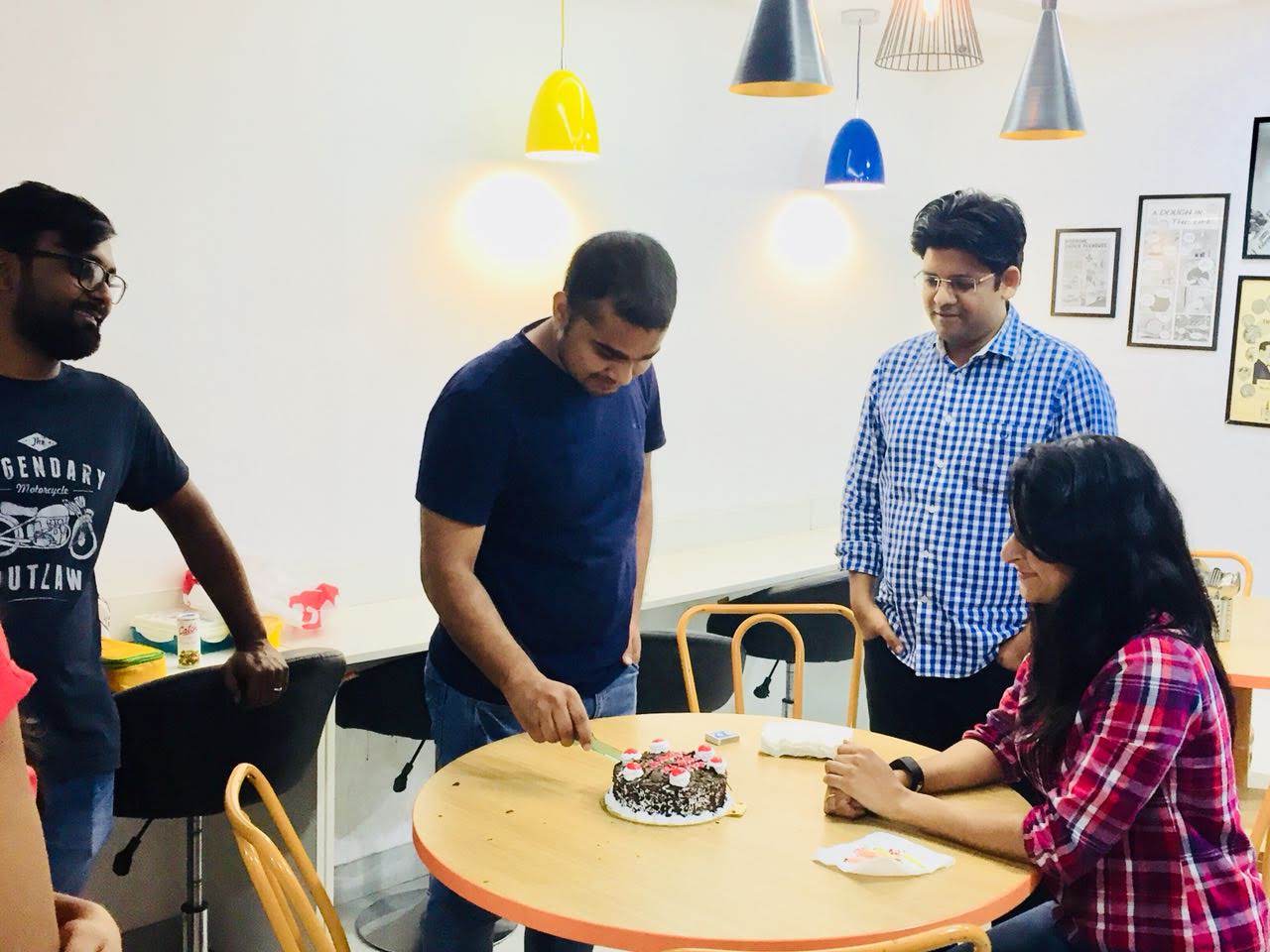
The Mad Decision
In 2018, I finally decided to start building my own ideas.
I had savings of 2 lakh rupees ($2,400). I could survive for 12 months. In that time, I had to build something and launch.
I told my father I quit my job.
They were shocked. The family started calling me mad. "Go to Dubai," they said. "Do some real job."
I said: "Give me 1 year. I want to do something myself."
I finally convinced them.
Now I needed to figure out where to go—a place where I could survive on my savings for 12 months.
I chose Hyderabad. A Twitter friend offered me free space at a government incubator workspace that was open 24/7.
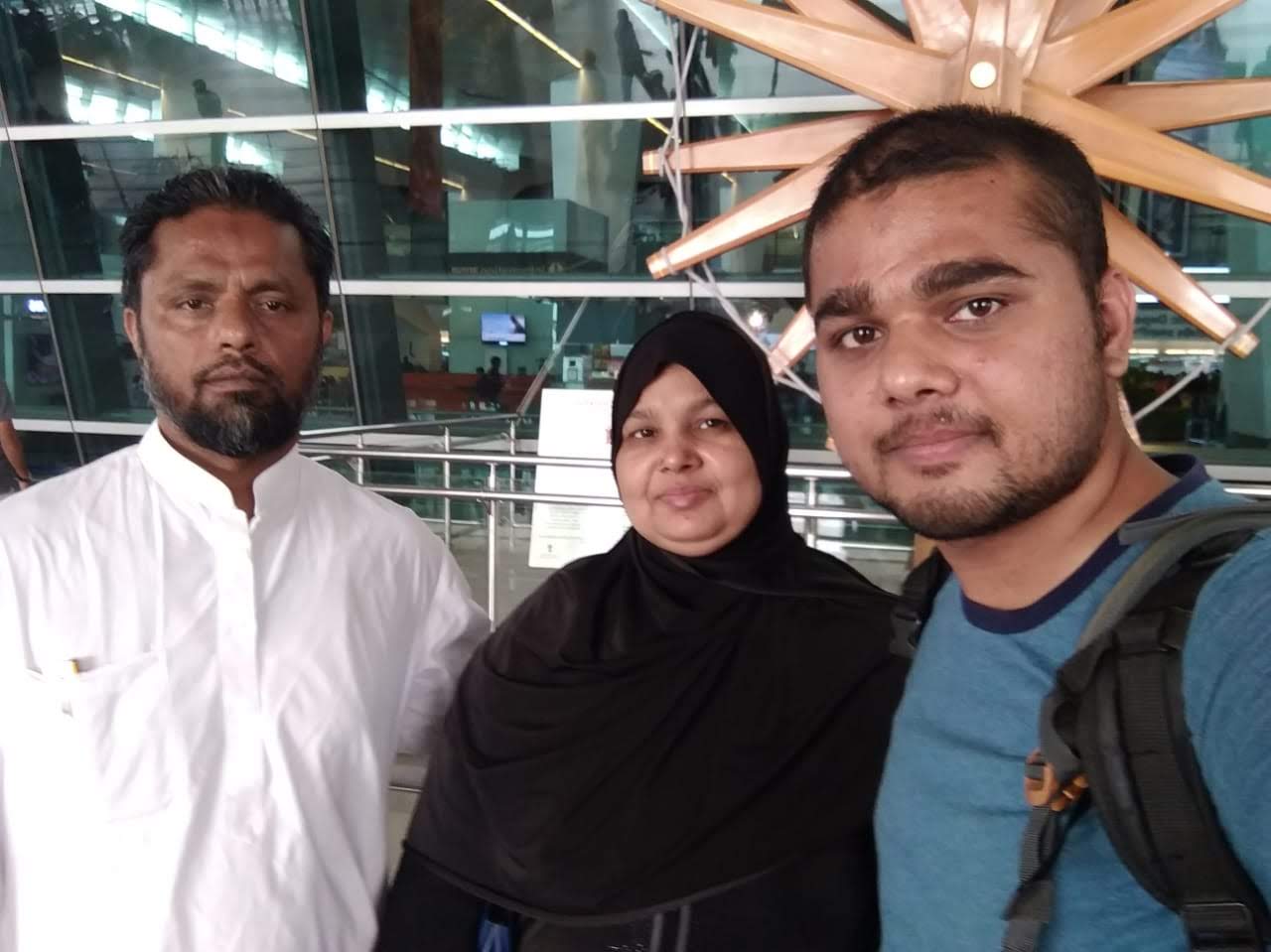
On August 26, 2018, I booked my first flight—Delhi to Hyderabad. My father and mother came to drop me at the airport. It was my first time flying. I was excited.
The First Failure
In Hyderabad, I had free workspace and one target: build projects.
My first idea was a resume builder that connected third-party data sources—GitHub, LinkedIn, Dribbble, Medium—to create portfolio resumes. I loved working with public APIs and displaying JSON data beautifully on web pages.
I spent 3 months on it. Built it. Then realized I had no idea how to market or push it.
I lost interest and stopped building.
First idea: Dead.
But here's the thing about failures—they teach you something.
While working on that resume project, I had collected a lot of information about APIs and documentation. I was using a GitHub repo called "public-apis" to find interesting public APIs to play with.
I noticed a problem: on that readme file, you couldn't tell which API was newly added or when it was added. There was no advanced search like Algolia.
I decided to scrape all the commits using GitHub's API and bind the commit dates to each API entry.
Now I had better data—700+ APIs with dates added. I uploaded everything to Algolia for free and got an advanced search API.
I built a simple, clean website with API cards, sorting by date, category pages, and advanced search. I bought the cheapest domain I could find: public-apis.xyz for $1 per year. Same tech stack: Angular 1.6, custom CSS, public APIs, mLab for MongoDB, and Glitch for the Node.js API.
Total cost: $1. Time to build: 1 week.
Product of the Day
I launched on Product Hunt without any planning. Shared it on Twitter. Got 10-12 upvotes in the first hour. Went to sleep.
When I woke up, it had exploded. #1 Product of the Day with 1,400 upvotes. Ryan Hoover liked the idea.
When your product hits #1 on Product Hunt, you get free marketing. People share it on Reddit, Hacker News, in blog posts, newsletters. At that time, getting #1 was something makers dreamed about.
I was happy with the result. I added features users requested and built a way for people to submit APIs directly through the website. Now the project wasn't dependent on that GitHub repo anymore.
In 6 months, the website was getting 200k+ pageviews—70% organic traffic. We had 800+ pages, one for each API's documentation. People would search for "xyz API docs" and find us quickly because of our good domain rating and backlinks.
We ranked #2 for the keyword "public apis," right after the GitHub repo I had built this from.
I ran it for free at first. Then I figured out monetization: sponsor ads and featured spots for API submissions. My first paid submission was $199 for a 1-month featured spot from smartcar.com.
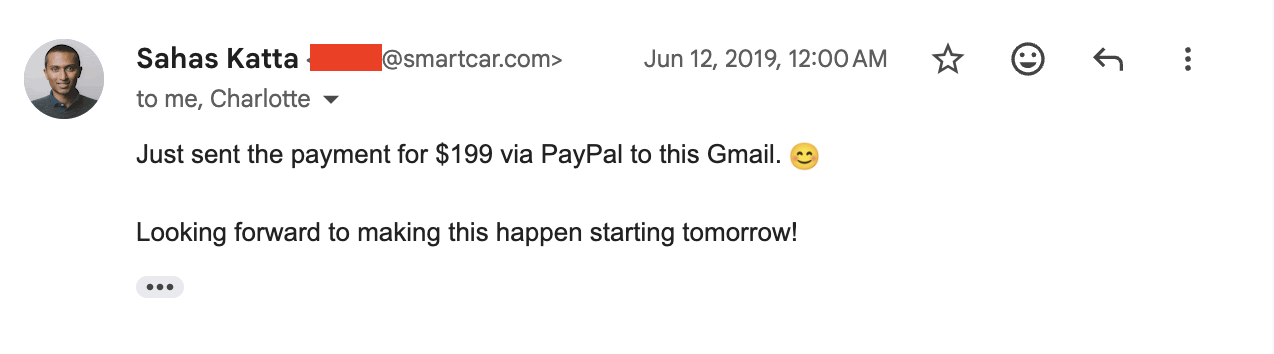
That month, I got 2 more sponsors. Total: around $600.
How did I get them? I made a list of top API companies and startups. DMed them on LinkedIn, Twitter, or emailed them. Out of 100+ messages, I got 3 sponsors.
I wasn't good at English, but I could pitch. I applied all the sales skills I learned at my father's shop: follow up consistently, show growth, highlight opportunities. Don't hesitate to follow up—the person on the other side has their own life and problems. They might not reply, but that doesn't mean they're not interested.
The First Acquisition Offer
That same month, I got an email that would change everything.
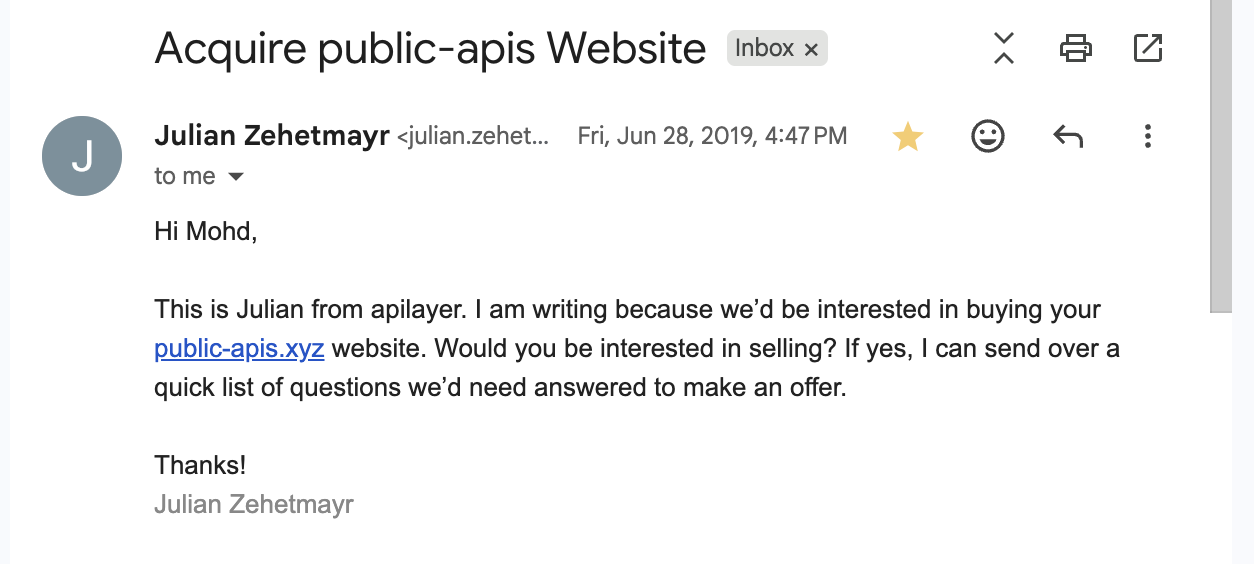
I thought I was dreaming. The biggest API marketplace company wanted to acquire my tiny 6-month-old project?
I replied professionally, trying not to seem too eager.
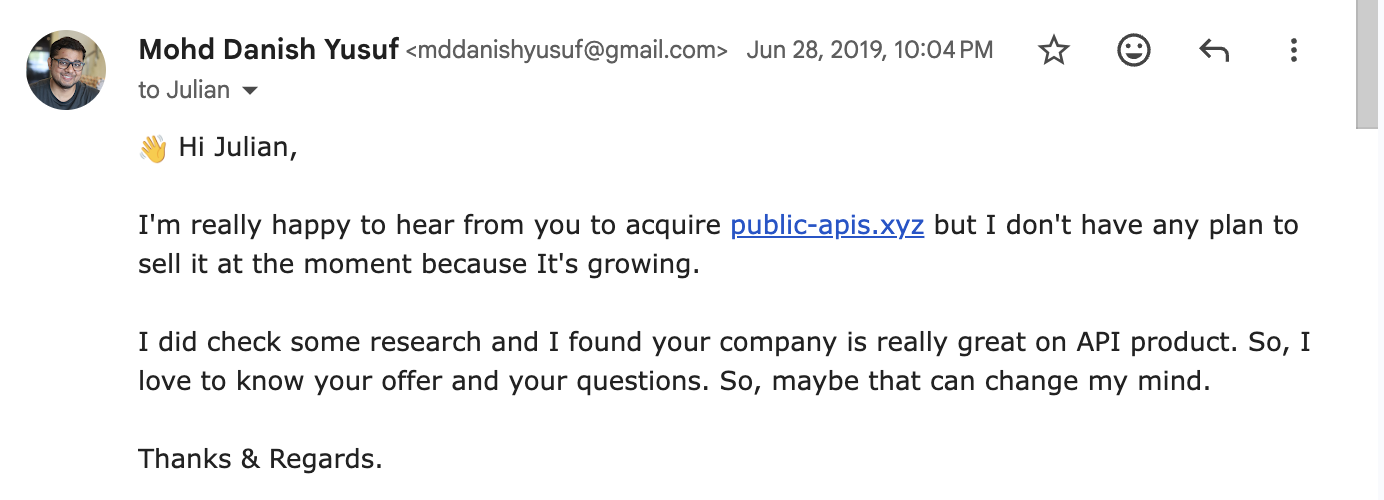
They shared some stats, and then came their offer.
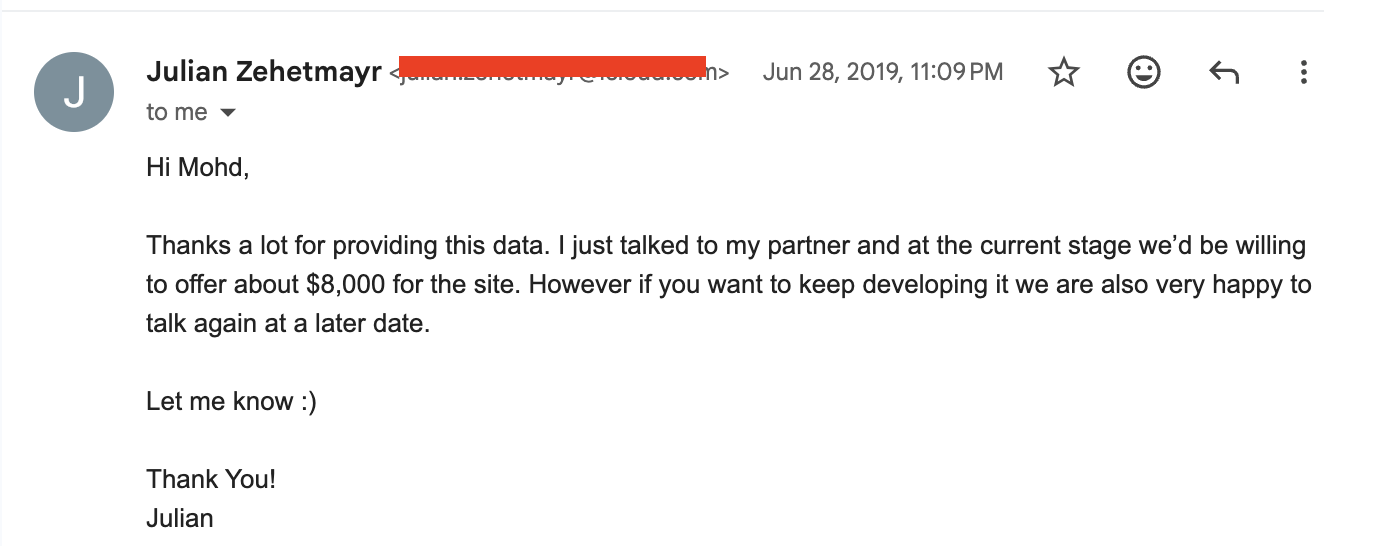
$8,000 for my project. In my head, I calculated: if I had a job, it would take 2 years to make this much. This was a lot of money.
But something in me resisted. I replied:
"I was expecting $50k+ because I can easily get $8k and more in 8 months with sponsors. Yes, I'll be in your connection for sure. Let me know about sponsoring the website."
They didn't reply back.
I thought: okay, let's grow this website and find new sponsors.
The next month, all my sponsors discontinued. Back to zero. I had to start from scratch—making lists, sending messages, pitching.
But things weren't as simple as before. Next month: no revenue. I was laughing and tense at the same time. Why didn't I take that acquisition offer?
But that's okay. It's good to grind more.
Building in Public
I started building other ideas while running Public APIs, sharing everything on Twitter. The response was good, but I couldn't make money from most of them.
Here's what I learned: don't get emotionally attached to ideas. If an idea doesn't make money, drop it or keep it for personal use.
The benefit of building cool stuff and solving real problems is that people appreciate your work and push you to do more. I was building tiny ideas and sharing them, which brought engagement and followers.
I grew my Twitter following from 0 to 1,000 that year just by building cool stuff and getting appreciation from founders.
Those appreciations were my real MRR (Monthly Recurring Revenue). People saw something in my work—the ability to figure things out quickly, build, and launch without worrying about making money first.
One idea I built on top of Twitter became significant.
I observed that companies were posting job openings on Twitter, but there was no way to see only job posts. So I built a platform that showed real-time job tweets.
Twitter's search API was free at the time. I created a list of keywords for each job category—5-10 keywords for Frontend Engineer, Backend Engineer, and so on. About 100 keywords total that would hit Twitter's search API. Then I cleaned the data, removed duplicates, applied basic filters, and pushed them to a database sorted by time.
I built it in less than 11 hours. Without AI.
I tweeted about it. The tweet exploded. Huge appreciation from big founders. I gained 1,000+ followers from that single tweet.
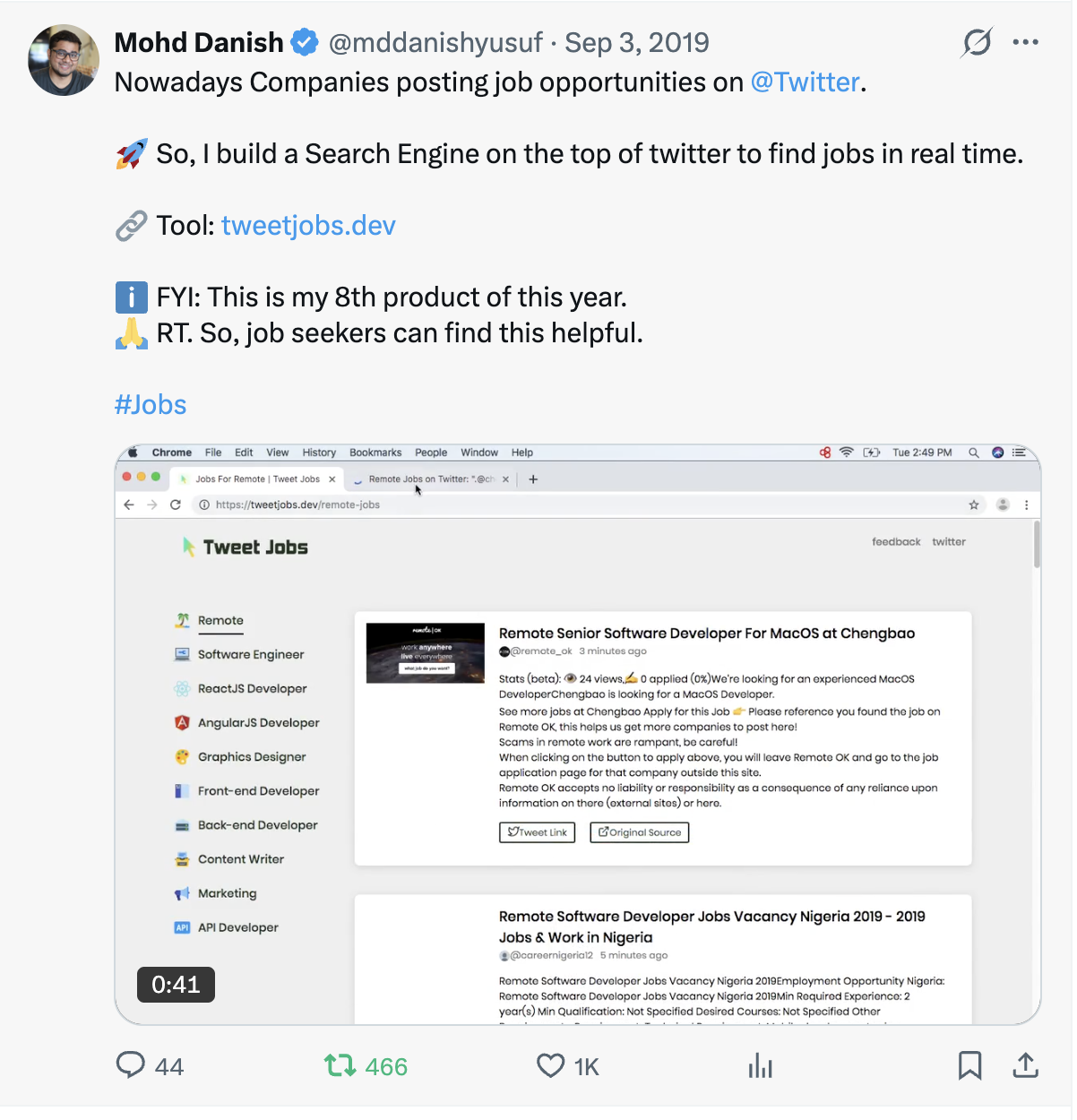
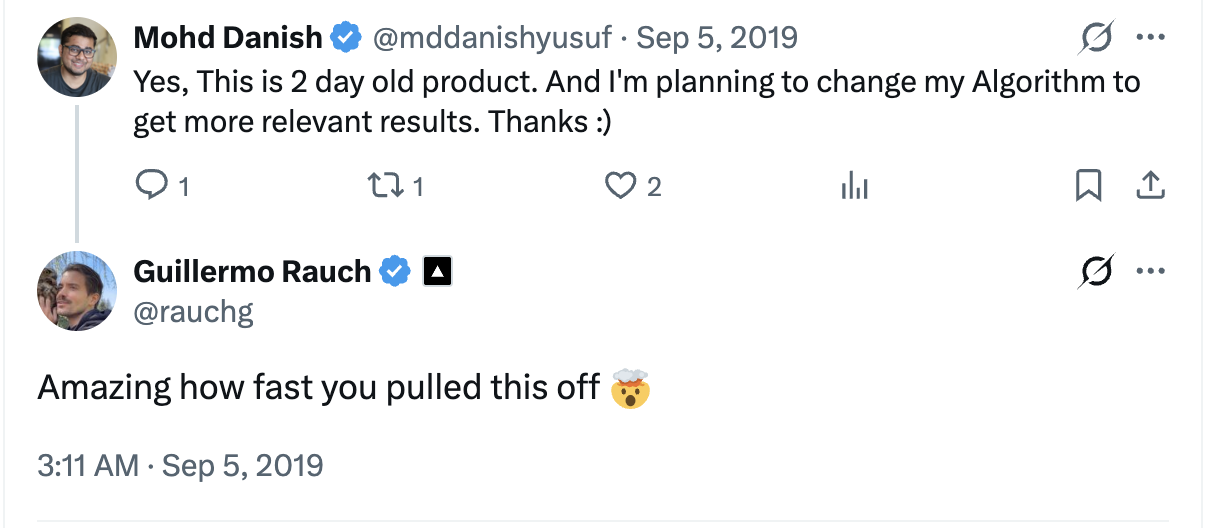
Guillermo Rauch, the founder of Vercel, retweeted it. I launched on Hacker News.

The traffic crashed my free Heroku server. I had to add my card to upgrade.
The LinkedIn Birthday Message
This is where things got interesting.
I ran TweetJobs for months but couldn't make money from it. Meanwhile, I was browsing LinkedIn and saw a notification: the buyer who had offered to buy Public APIs was having a birthday. LinkedIn suggested I wish him.
I thought: why not? So I sent a simple birthday message. He replied.
That was it. Just a birthday wish.
Three weeks later, he messaged me on LinkedIn.
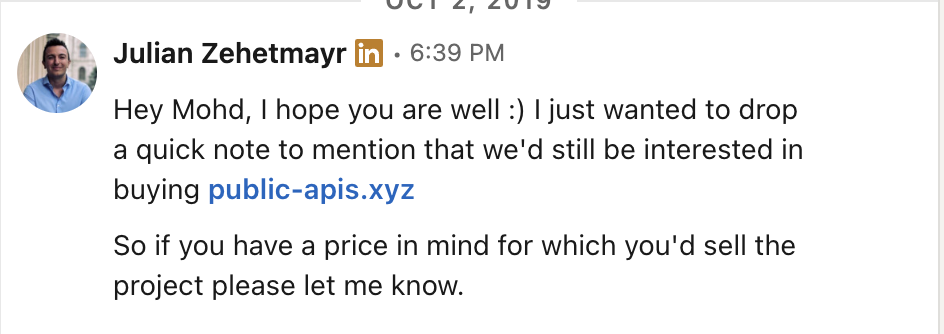
This time, I was ready. I had made up my mind. I wanted to sell. But I didn't want to seem eager.
I replied: "Now Public APIs traffic is double since we talked. Can I get some time to think about the price?" And I shared a public analytics link.
He replied: "We had a chance to look at the statistics today and given the current traffic we would propose a purchase price of $15k for the site. To give you some relation, we recently also acquired any-api.com, which has almost 3x as much traffic and Alexa rank for $30k."
Now I understood: he was acquiring all API marketplaces to market his APILayer company's products. He was genuinely interested.
I applied my selling skills:
"Yes, I know any-apis.com but public-apis.xyz is better in performance, accessibility, and SEO. People trust the website and love the UX. Main thing is the keyword 'public apis' and growth on Google search is high. $15k is not justifying my 10 months work. I'll get back to you by tomorrow with my price if that's ok."
I said "tomorrow" because I didn't want them to know I was eager.
The next day: "After discussion with my friends, here is my price: $22k."
One hour later:
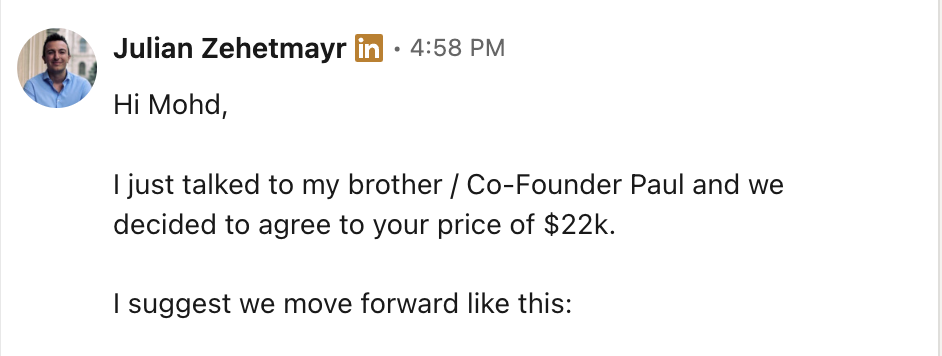
🎉 My first big acquisition: $22,000 after 10 months of grinding.
That's when I called my father. At that time, the dollar was around 64 rupees. I had made 15 lakh rupees—more than I would have made in years at any job.
I proved I could make money without doing a traditional job. They were finally happy.
Part Three: Building the Dream
Singapore and the NoCode Boom
With money in my bank account, I needed to figure out what to do next.
Let me introduce my first online friend: Fajar Siddiq from Singapore. He had helped me make videos for product launches and created a Telegram community where we talked about products, ideas, and growth.
I had heard that Pieter Levels, Marc (WIP founder), and many other makers were setting up companies in Singapore because it was easy to run a company remotely and Stripe was available there.
I decided to visit Singapore—set up a company, get a Stripe account, and do my first international trip like other digital nomads.
I got a 30-day visa, and Fajar hosted me at his house. Thirty days to build my next idea and launch.
What should I build? I don't hunt for ideas—they come to me naturally, but it takes time. So I enjoyed Singapore with Fajar, eating local food. I even tried chili octopus pickle for the first time. It was amazing.
2019 was the NoCode tool boom. Every day, a new no-code tool company was launching. I was excited.
One month before the Public APIs acquisition, someone had tweeted asking for a tool that could connect APIs without coding. I grabbed the domain nocodeapi.com for $10 but had no idea how to build it, so I put it in my backlog.
Now, with $22k in the bank and 30 days in Singapore, I decided to build NoCodeAPI.
I built a basic version in 20 days. Then I got an email: Stripe had launched in India, and I had waitlist access. So I cancelled the plan to set up a company in Singapore.
I returned to India in December, set up a sole proprietorship, and integrated Stripe. That integration alone took over a week—my first time adding a payment gateway to a product.
The Launch That Changed Everything
On January 11, 2020, I launched NoCodeAPI.
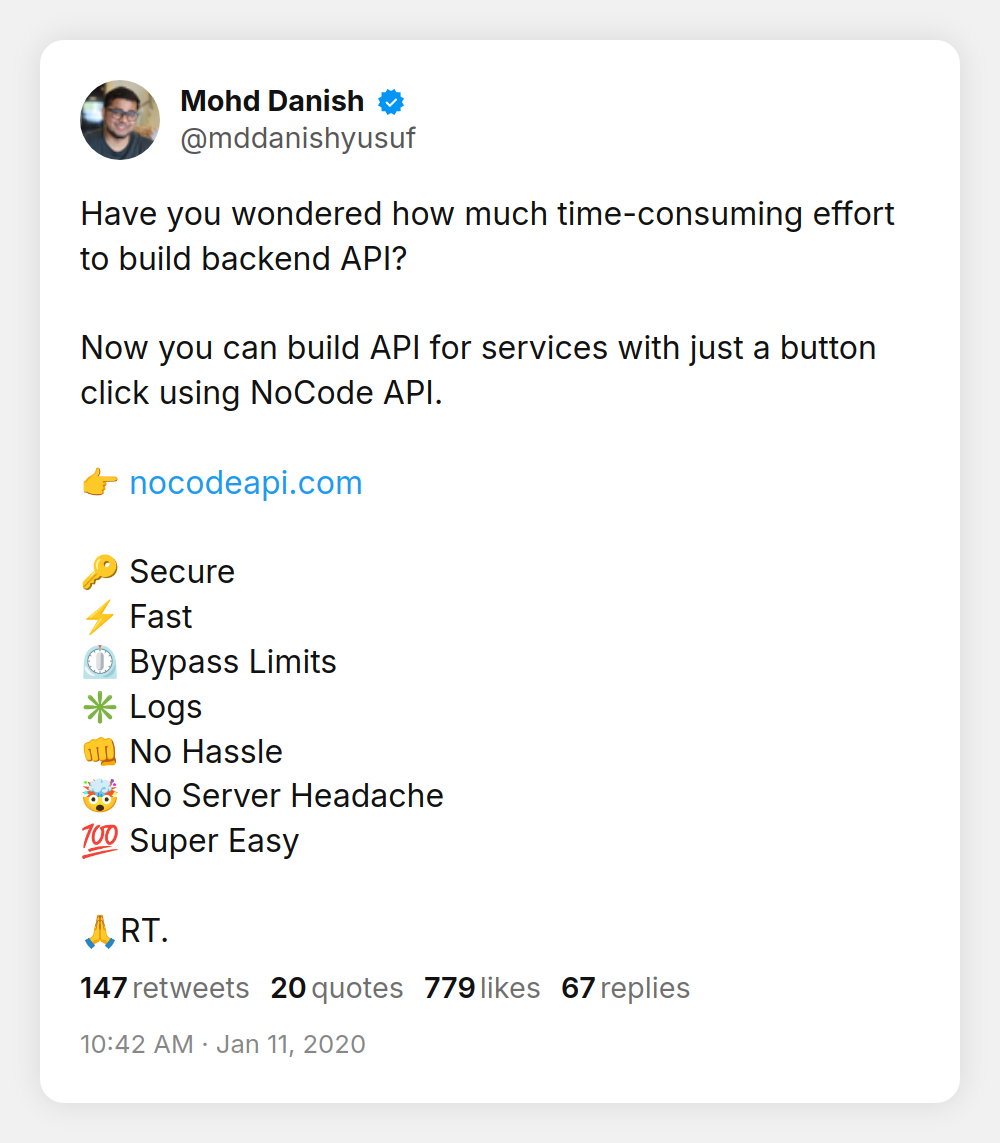
#1 on Product Hunt. Thousands of people loved the simplicity of the idea: an API proxy that bypassed rate limits, API endpoints without API keys—perfect for no-code tools. Most users were no-code developers who wanted to play with APIs without complications.
For a new idea, the first launch is everything. You learn from user comments, number of signups, support chat messages, and direct messages. I listened to everyone and put everything in a backlog.
From the start, I understood something crucial: to get constant traffic, I needed to rely on organic search and deliver features users were asking for (not every feature—just the right ones).
I researched each API integration, finding limitations users complained about in official APIs:
For example, Airtable users on forums wanted unlimited API calls without limits, more than 100 records in one call, and secure API keys (since most no-code tools run client-side). So I implemented all these features and wrote documentation covering these issues.
Then it happened.
I was sitting in my co-working space when my phone buzzed: "You received your first payment."
I built a small dashboard to track signups and API setups. I noticed most users set up their first API but then had issues integrating. The logs showed errors.
I realized my no-code API users weren't developers—they were non-tech people wanting to learn no-code tools. They needed to be taught.
So I started making YouTube videos: how to get started, how to use with other no-code tools. I embedded these videos on the website for each integration.
This YouTube strategy worked. Within 4 months, YouTube was driving 5% of my traffic. People started successfully setting up APIs.
The 1-on-1 Strategy
I reached $360 MRR in the first 6 months. How? One-on-one video calls and hundreds of tutorial videos.
I put a Calendly link on every API docs page. Whenever users saw the docs but didn't know how to integrate, they could book a free video call with me.
I was getting 4-6 calls every day. I spent hours with my customers, learning what tools they used and what else I could add to NoCodeAPI.
I did this continuously for 1 year. It took me that long to reach $700 MRR.
Let's do the math: $700 × 12 = $8,400 ARR. Asset value at 3× ARR = $25,200.
Not bad for one year of hard work.
Then I discovered something interesting: APILayer had been acquired by Idera, Inc. And the project I sold them? Dead.
Here's the best part: when I sold to them, there was no agreement preventing me from competing.
So I searched for domains and found public-apis.io available. I already had the API data. I rebuilt the entire thing, launched on Product Hunt, Hacker News, Reddit, and let it run free with affiliate links.
Time to rebuild and launch: 10 days.
COVID and the Pivot
I grew NoCodeAPI from $700 to $1,000 MRR in 3 months using the same strategies: new integrations, YouTube videos, direct video calls.
Then March 2020 happened.
COVID hit. I was stuck alone in Hyderabad. I got COVID.
That was the worst feeling—stuck alone, far from home, the whole world in chaos. I could barely stand. Getting food delivered was nearly impossible.
I walked 4 kilometers to a hospital, seeing completely empty roads. It felt like a movie scene. The doctor said to stay isolated and rest.
I locked myself in the hostel, surviving on mutton soup that I ordered in bulk whenever restaurants were briefly allowed to deliver. After 10 days, I recovered.
When airlines reopened after 30 days, I flew home immediately. The situation got much worse after I left.
Building the Dream House
It was April 2020. Back home, feeling better, ready to work again.
But there was a problem: I had been away so long that there was no room for me. We lived as a joint family with my father's brother.
I told my father I needed a small room for my workstation. Family issues arose. My uncle wouldn't allow me to build a room.
That moment, as painful as it was, led to the best decision of my life: to build my own house.
I moved to Aligarh (60 kilometers from my hometown), where I had studied for 6 years. I rented a small house for $100/month and got a fiber internet connection.
Now I could focus on NoCodeAPI while hunting for land for my dream house.
NoCodeAPI was getting constant organic traffic. Word of mouth was spreading because during lockdown, everyone was building something with no-code. MRR grew $100-$200 monthly.
After 10 days of searching with friends, I found it: 1,400 square feet in a closed colony with only 20 houses planned, no surrounding buildings, peaceful. The price: approximately $40,000.
I had about $10,000 in my bank.
I told the builder I'd come back. I had made a promise to myself: I would marry only when I had my own house. I was 29. It was time.
I made a list of friends and family I could borrow from. I called everyone. Everyone had excuses. The plan to borrow money failed completely.
The Black Friday Miracle
November 2020. I was browsing Twitter when I first heard about Black Friday Deals. I explored and saw many SaaS products running lifetime deal sales.
The idea clicked: launch a Black Friday Deal for NoCodeAPI to make enough money to buy the land. This was my only option.
I created three lifetime pricing tiers: $149, $199, $249. Launched the next day. Shared with all free users, Facebook groups, Twitter.
My phone started buzzing. Notifications every 5 minutes. For an entire week.
I made approximately $53,000 in November from lifetime deals alone. 300 slots sold.
Things were working in my favor. I kept questioning why this was happening to me. But I kept doing what I planned.
I finalized the land deal: 1,400 square feet for $35,000 cash. Closed within one month.
Now, lifetime deals aren't great for long-term product value. Many Twitter mentors suggested I stop. So I ran one last batch in December—another $21,000+ in sales.
Total lifetime deal revenue: $74,000.
I stopped in January 2022. MRR was around $2,700 at that point. Growing further would be harder with just monthly and yearly subscriptions, but I was satisfied.
House construction started. I had enough money not to worry about building costs.
The Second Public APIs Sale
Remember Public APIs v2 that I rebuilt? It was capturing all the organic traffic the sold version used to get.
I added API submission fees: $49 one-time, $149 for a featured spot for one month. All automated. Making $600-$1,000 monthly plus $100+ from Wes Bos affiliate courses.
While running NoCodeAPI and Public APIs, I kept building small ideas for fun, sharing on Twitter. The engagement helped NoCodeAPI, and I was happy.
One API company submitted their public API. They seemed new, similar to what APILayer was doing.
I decided to try selling again. But this time, I would approach the buyer.
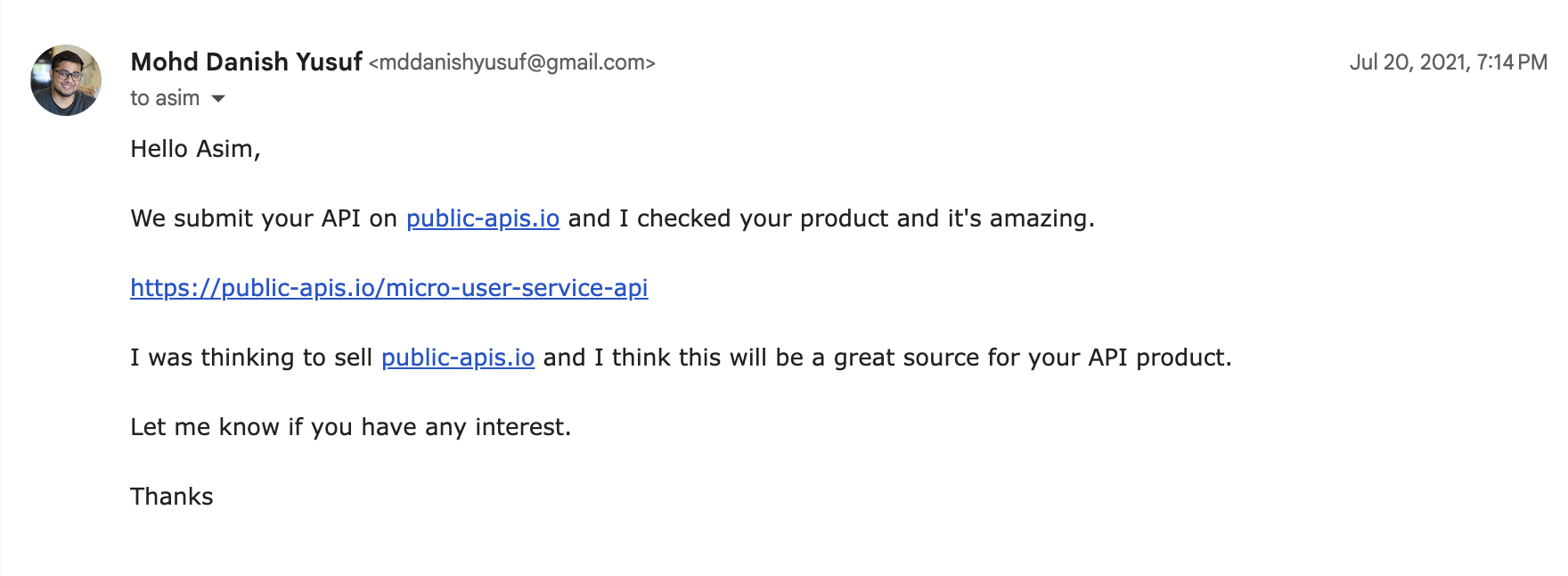
He replied within 8 minutes. That's when I knew he was interested.
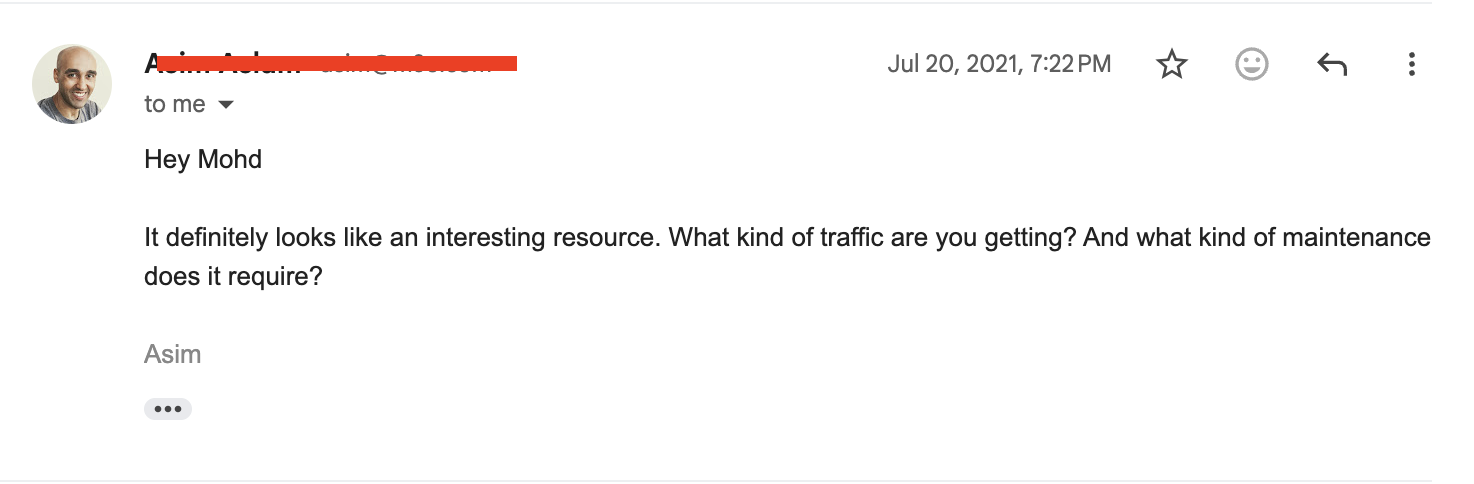
I applied my selling skills:
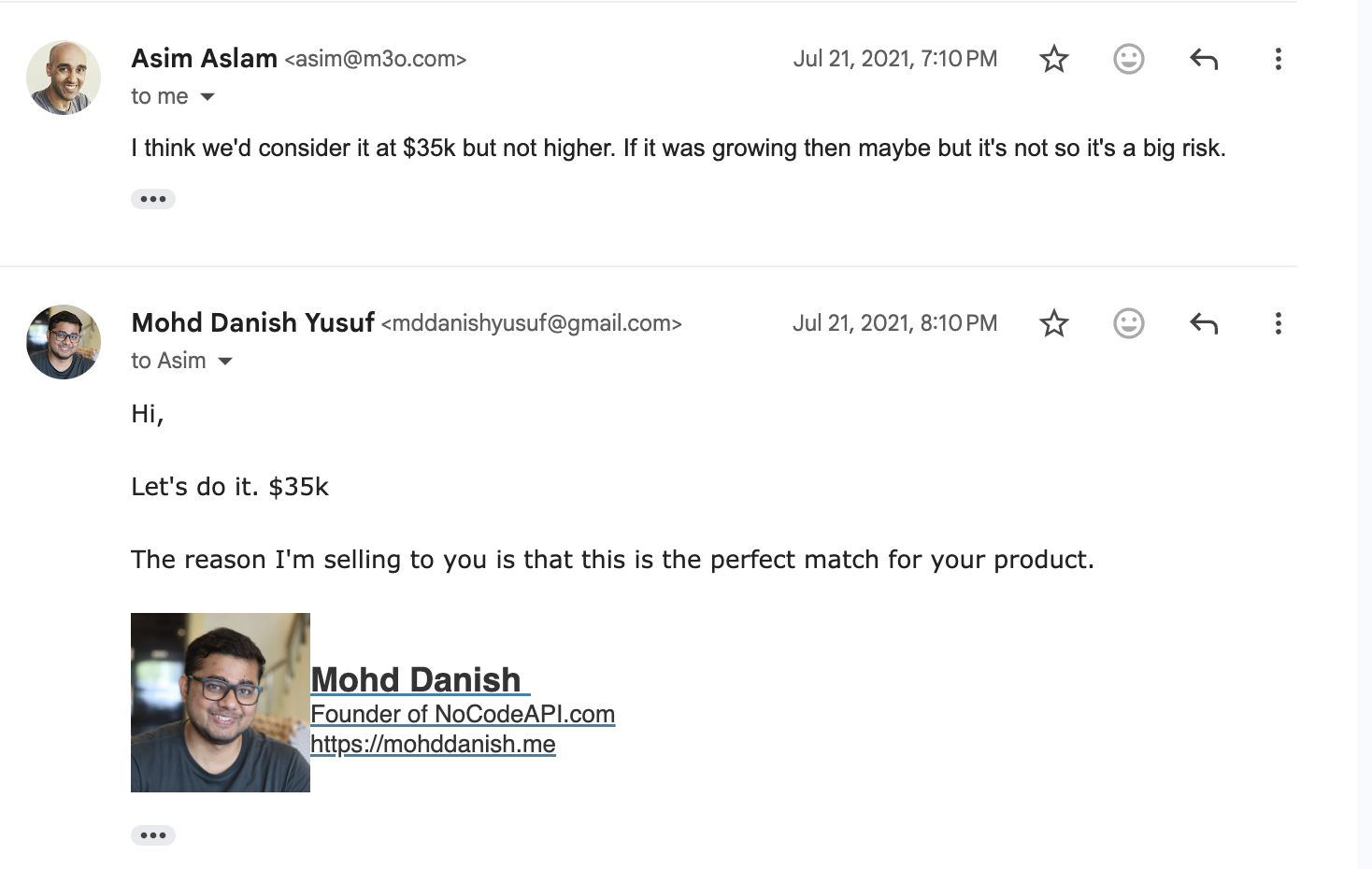
"It's the perfect product matched to your portfolio, that's why I pitched you. More than 70% organic traffic. $0 to maintain and it's all on autopilot."
He came back with an offer: "Maybe $30-35k."
I remembered my mistake from the first acquisition. I replied: "Let's do $40k. I can't go lower than this."
We closed at $35,000 in less than 24 hours. The fastest acquisition I ever did.
With that money, I bought another 1,500 square feet of land adjacent to my house as an investment. The value has doubled in 3 years. I use it as a mini garden but keep it separate from the main house.
The Big Exit
NoCodeAPI was doing great: 30,000+ registered users, approximately 700+ paying users (recurring + lifetime). I kept making YouTube videos, publishing use case blogs, cross-posting on dev.to and Hacker News, and relaunching on Twitter and Product Hunt whenever there were significant changes.
I also built another idea: a platform connecting angel investors with solo founders. Small checks of $5-10k to help them pay bills and focus on their products.
Launch stats:
- 🏆 #1 on Product Hunt with 645+ upvotes
- 💡 30+ products added
- 👥 290 registered users
- 🤑 7 investors onboarded
- Made $307 first day
- 📈 6,500 pageviews
- 💰 2 acquisition offers
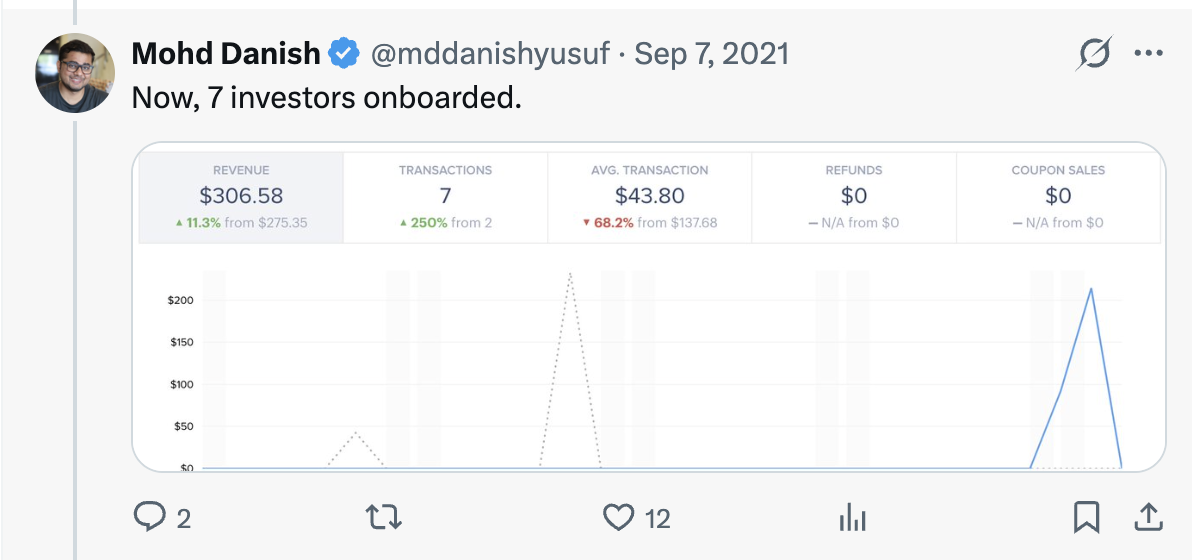
I sold it for $18,000 to a LinkedIn connection in just 2 days. How do you value a 2-day-old idea? Based on buyer excitement, launch momentum, user appreciation, and revenue potential.
I also sold TweetJobs for $5,000 via acquire.com. Better to make money from liabilities or assets than let them sit.
Marriage and the Promise Fulfilled
November 2021. I went back to my hometown from Bangalore to get married.
My house was almost complete. I had made a promise: marry only when I build my house.
I did it. I got married. I built the house.
I took one month off to travel with my wife. In February 2022, we moved into our new home.
After 2.5 years of solo building, something hit me: loneliness. Boredom. This product had given me more than I ever imagined, but I felt like I needed to do something else. Scaling from 30,000+ users further as a solo founder seemed hard.
After getting married, we planned to have children—we were already late and didn't want to delay. Things were great, but I had more responsibilities now: doctor visits for my wife, house stuff, everything.
I wasn't getting focused time to work on NoCodeAPI. Stuck at $4,200 MRR.
I decided to focus on family for the remaining 6-7 months and sell NoCodeAPI.
I listed it on acquire.com for $230,000.
My valuation: $4,200 × 12 = $50,400 ARR × 4 + $30,000 buffer = $230,000. Expecting at least $200,000.
The founder of acquire.com pushed my listing. 80+ people showed interest. After 3-4 days, two serious buyers emerged.
Both were happy with the valuation—they saw the no-code market was booming.
First buyer: willing to pay $230,000, but wanted to remove lifetime users from the platform.
Second buyer: willing to keep lifetime users, but only offered $180,000.
I took the lower offer.
Why? Because I didn't want to break my trust with my lifetime users. They had supported me. I couldn't betray that.
The deal closed in 10 days. Money in my account.
Total NoCodeAPI journey: $180,000 exit + $74,000 lifetime deals = $254,000.
Investing in Forever
What did I do with that much money?
I bought a big farming land in my hometown: 216,000 square feet. Invested 90% of the money. After discussing with my father, we planted 1,100 wood trees that grow in 4-5 years. We can legally cut and sell these trees.
Projected revenue in 5 years: $25,000 from the trees alone.
After 3 years, I got an acquisition offer for the land at 3× what I paid. I didn't sell. I expect 7× returns in 5 more years.
I could retire. But I don't want to. I love building new ideas.
Part Four: The New Chapter
Starting from Zero Again
I took 2 months off from building but kept browsing the internet and Twitter for ideas.
I tried building clones: Typeform, Airtable, others. But I realized something—this wasn't what people expected from me. Before, I was building new, unique ideas. Clones weren't me.
I dropped all of them after 3 months. Wasted time, but learned lessons.
Then I found an idea from Twitter: someone asked for a tool to monetize data via API. A no-code tool that connects to a datasource and gives endpoints to users who pay.
I bought quickapi.io, built it in 2 weeks, launched. People loved it. Got 10+ customers interested.
I ran it for 45 days. No revenue. So I sold it for $5,000.
If I don't feel excitement and revenue, I drop the idea.
The Cash Crunch
There was a phase where I was completely out of funds. All my money was invested in land and family things. Liquidating assets wasn't easy, and I wasn't planning to.
In 3 months, my sister's wedding was coming. I had to pay all expenses. I always work for my family—they supported my education during bad times. Now it was my turn.
So I launched a service: MVP as a Service. $10,000 for an MVP built in 2 weeks. Announced on Twitter.
People knew my work. I got two clients.
Paul Copplestone, founder of Supabase, DMed me to build his personal idea. I built it. He paid $10,000.
Second customer from the US with a YouTube-related idea. Built it. Another $10,000.
$20,000 from services. Then I stopped—I wasn't meant for service work. I did it because I needed money.
Sister's wedding happened. All good. Some money left to survive.
IconBuddy—The $4,000 Bet
One day, my Twitter friend Fayaz DMed me on Telegram.
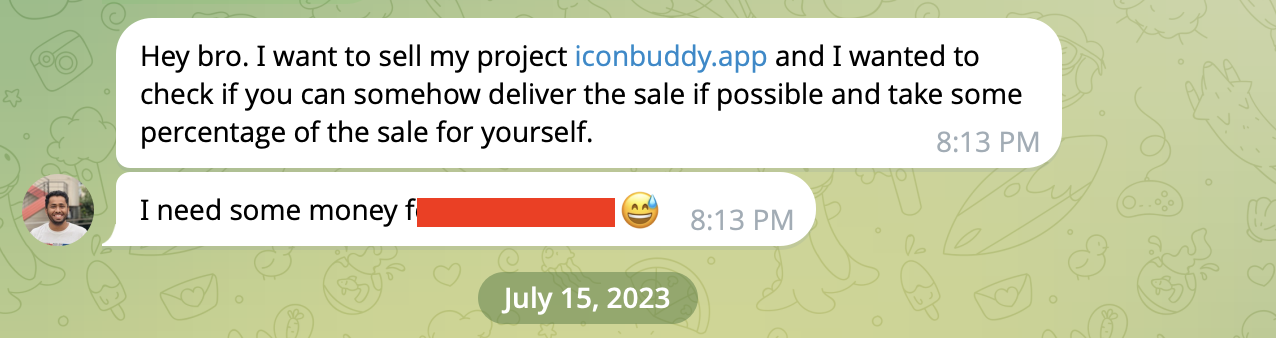
I checked the project. No revenue. No traffic. No domain rating. Nothing.
But I loved the idea. I pitched myself to acquire it.
I sent a video call link. Closed the deal in 30 minutes.
Fayaz was one of my early supporters who had helped me write API documentation.
I asked: "How much are you expecting?"
He said: "You tell me."
I told him: based on revenue, it's not worth acquiring. But I like the idea, and you spent time building it. I'm paying for the idea, not the code.
"I have $4,000 in my bank. That's all I have."
He agreed.
I bought my first business from my best Twitter friend for $4,000.
Making It Work
The project was built with a tech stack I didn't know. Instead of rebuilding, I decided to launch first and see if people liked the idea.
I launched on Product Hunt, Twitter, Hacker News, Reddit—everywhere I knew.
Boom. Featured everywhere. People loved the simplicity: easy icon search, customization, 160+ collections, 300,000+ open-source SVG icons all in one place.
I did some basic SEO: meta data changes, search console setup, sitemap indexing. Let it cook for a month.
Now monetization. I tried my old method: sponsor slots—4 spots in the hero section. But finding and pitching sponsors as a solo builder was tedious.
From day one, I added authentication for downloads so I could market sponsor products to users. This worked for 3-4 months, making around $250/month × 4 slots.
Then I discovered what users actually wanted: a Figma plugin to use icons directly. So I built Figma, VS Code, and Framer plugins.
I added a one-time subscription: $49 for lifetime access to premium features.
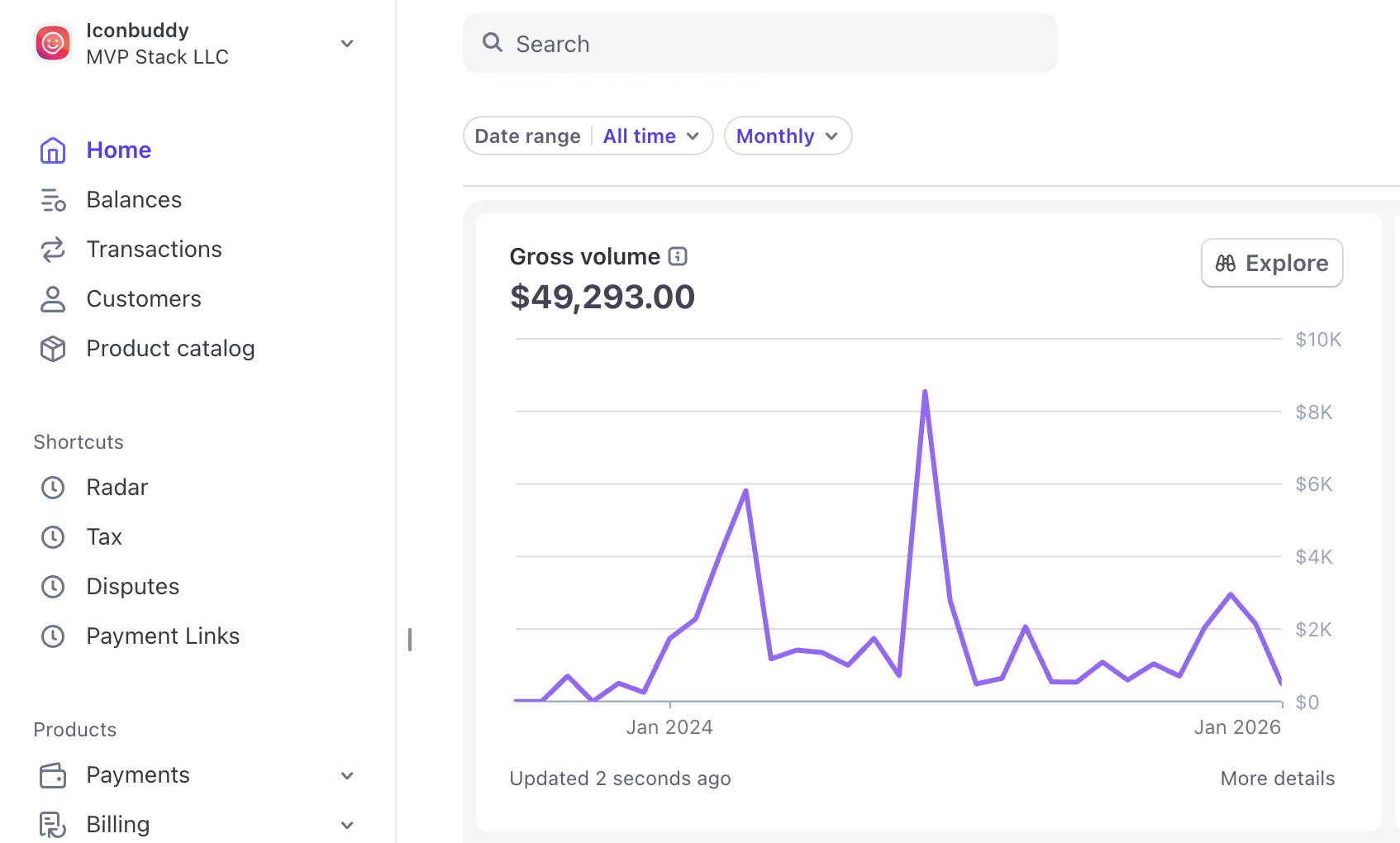
This worked. IconBuddy has generated approximately $50,000 in revenue.
The SEO Experiment
Some decisions helped IconBuddy become a brand. Big companies were signing up and buying subscriptions.
I acquired the .com domain for $4,000 from Namecheap premium domains. The .com extension builds trust.
Then I ran an experiment. The keyword "free svg icons" had massive search volume. I searched for freesvgicons.com—available for $10.
I grabbed it, cloned IconBuddy with different metadata focused on keywords like "free," "svg," "icons," and backlinked to all my other projects.
Launched only on Reddit and Hacker News. No Twitter, no Product Hunt.
Within 2 months: organic traffic started flowing. After 1 year:
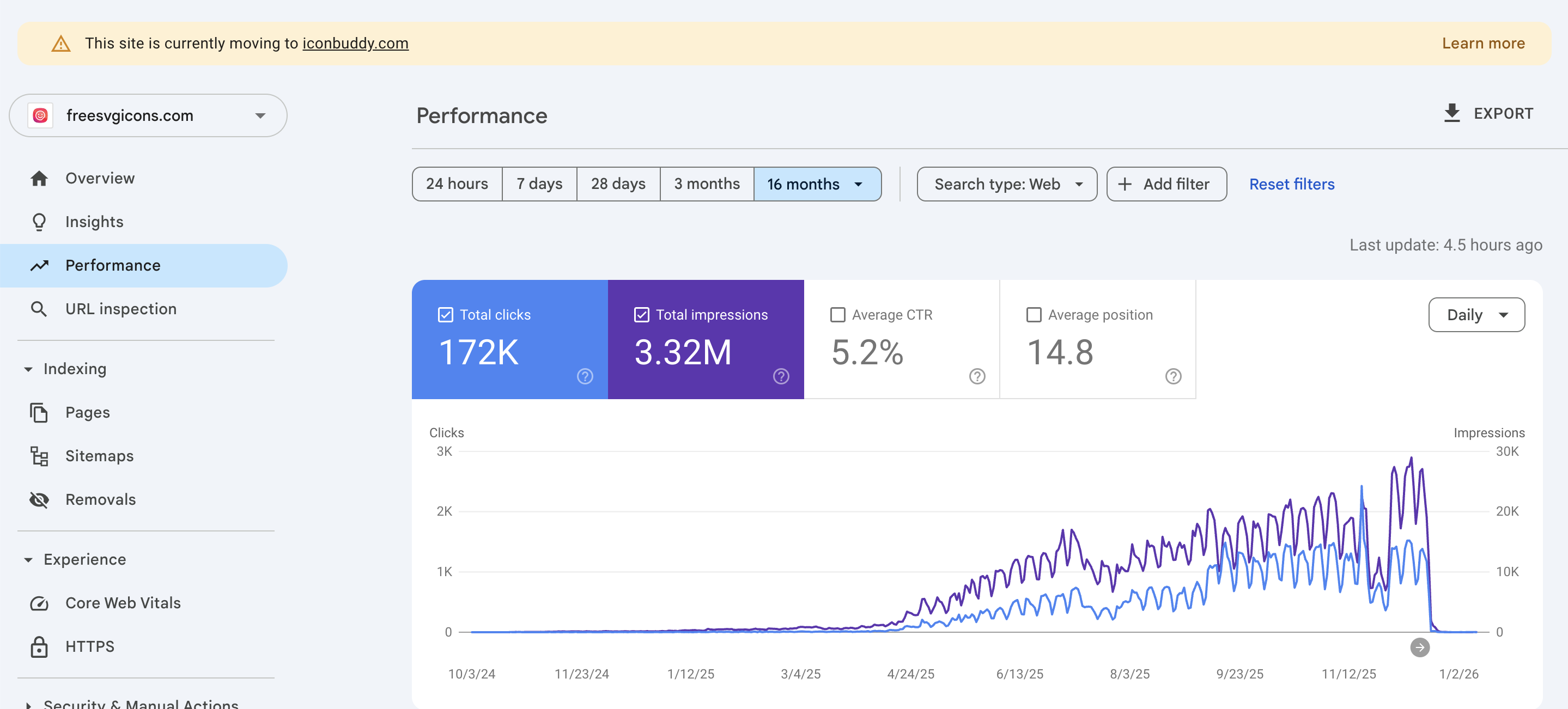
10,000 registered users on FreeSVGIcons with the same plugin access as IconBuddy.
But running two separate assets with the same idea wasn't good for scaling and value.
I made a hard decision: redirect FreeSVGIcons to IconBuddy.
Everyone said it wouldn't work. Why redirect high traffic to lower traffic?
IconBuddy: 100,000+ pageviews FreeSVGIcons: 350,000+ pageviews
But my goal was to increase IconBuddy's brand value, not maintain a separate site with lower revenue.
I initiated a permanent redirect. After 45 days, IconBuddy replaced FreeSVGIcons' position in Google for the same keywords.
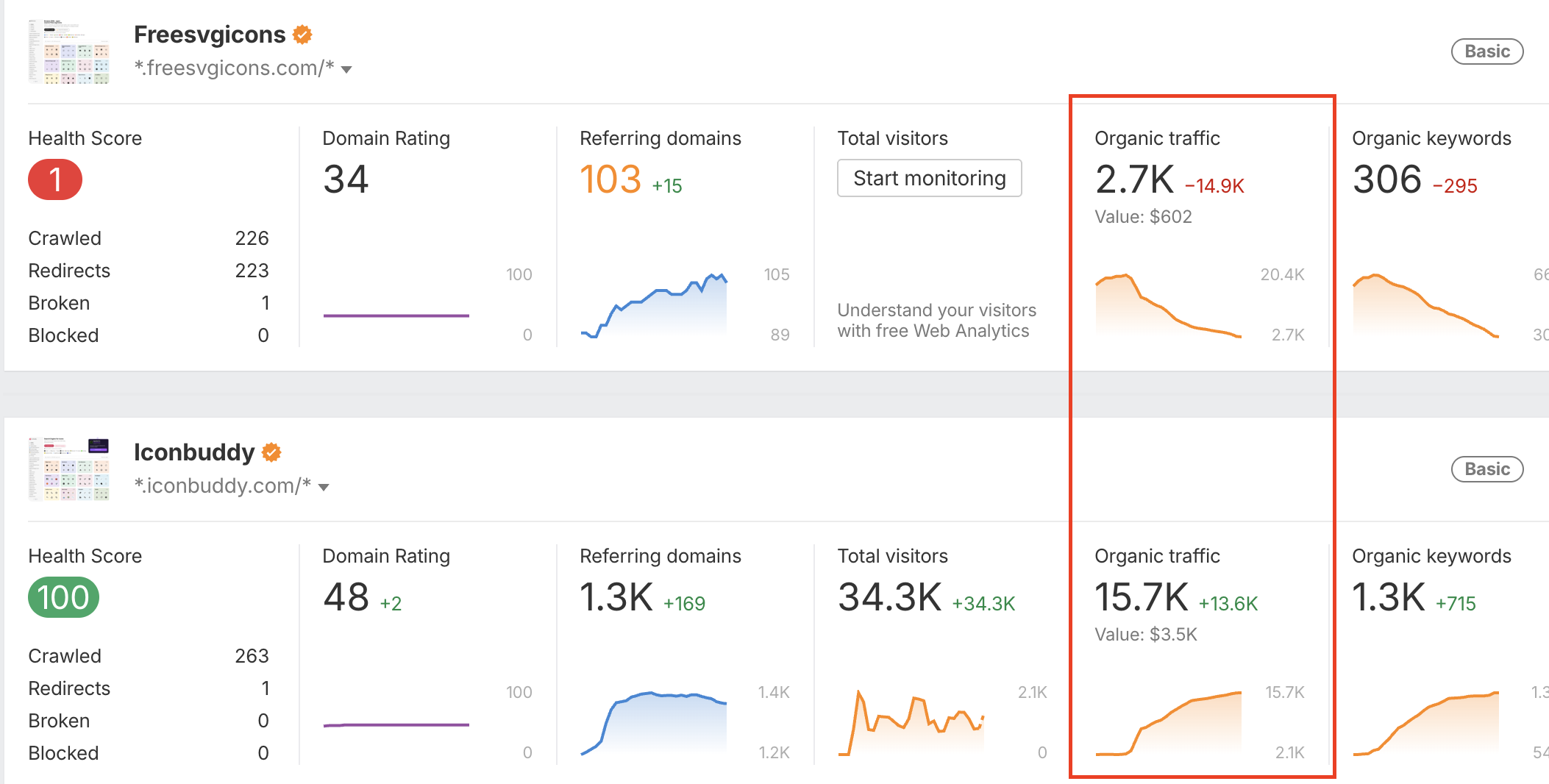
Now everything was consolidated. One product to focus on. 7,000-10,000 signups monthly. 90,000+ registered users.
SuperDev Pro—The Latest Win
I wanted to build something related to design tools for my IconBuddy audience. Couldn't figure out what.
My Twitter friend Bilal recommended a community of indie hackers. I don't usually join communities, but he insisted.
Someone from that community messaged me on WhatsApp: "I'm struggling to grow my Chrome extension. Thinking of selling."
I checked it. A Chrome extension with 14 developer tools in one. This was exactly what I was looking for—something to sell to my IconBuddy audience.
We had a video call. He was asking $16,000 based on $500 MRR, 6,000 users, and $5,000 made in the last 12 months.
I offered $10,000. He said deal.
Problem: I only had $4,000 in my account. So I made a deal—I'd pay the remaining $6,000 within 30 days.
He agreed.
I got the domain, assets, and Chrome extension. Same playbook: launched without changes on Product Hunt, Reddit, and Twitter.
SuperDevPro.com—14 tools in one extension. People loved it.
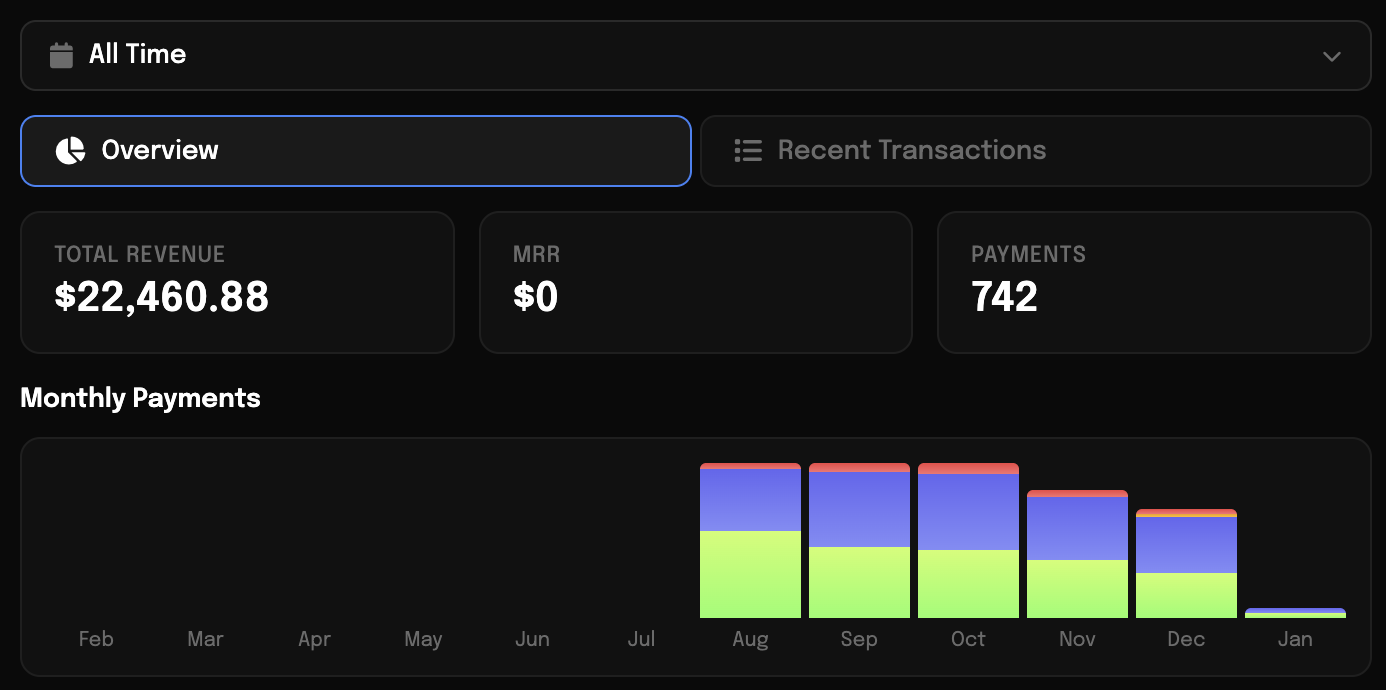
Launched August 15, 2025:
- August (15 days): $4,811
- September: $5,474
I recovered the cost in 45 days and paid him back.
Total revenue in 5 months: $22,500.
Epilogue: What I've Learned
Currently, I have 5 active projects. Three of them make good money. I'm happy with them and planning to grow each one—adding new tools to SuperDev, updating IconBuddy with new icons, adding features to MailLayer.
My plan for 2026: launch a new SaaS. It's ready to launch this month. The idea came from solving my own problems. Even if it doesn't take off, I'll use it myself.
Looking back at 8 years of solo building, there were many ups and downs. But I enjoyed every moment. I learned how to handle low points and stay calm during high points.
There's no shortcut. Making these successful products and exits took 8 years of my life. And I still work every day to do better and build cool, interesting ideas.
If I can do this, you can too.
One important thing: don't follow this book or my journey blindly. Just get motivated and do things your own way. You are the best at what you can do. No one else can do it like you.
I got inspired by Pieter Levels, Marc, and Guillermo Rauch. But I didn't follow their route. I was good with API stuff, so I built products around APIs. After 4 years, I found excitement in design tools and started doing that. I don't know what's next.
This is all I wanted to share in this book.
Thank you for reading my story. It's not boring—it's just real.
Bonus: My Hacks
Everything I've learned from building 40+ products. No theory—just what actually works.
Getting Ideas
Two approaches that work:
First: Copy existing products that make money, but do what they're not doing. This is hard—you're building a competitor. But you can capture market share by being different, easier to use, with better customer support. Look at products with 1-2 star reviews. Those reviews are gold—they tell you exactly what's broken.
Second: Look for problems people need solved. Custom solutions. Small data aggregation tools. APIs that connect things. Watch what people are asking for in communities, Twitter, Reddit, Indie Hackers.
To find ideas: solve your own problems first. Every product I built came from something I needed myself. NoCodeAPI started because I was frustrated connecting APIs. IconBuddy started because I couldn't find good icons fast enough.
Don't get emotionally attached to any idea. Your first idea might succeed, or your 10th, or your 100th. Keep trying and building. Kill ideas fast if they don't get traction.
The best ideas come from scratching your own itch. You understand the problem deeply, you know what good looks like, and you'll actually use the product yourself.
Launch Strategy
Here's my exact launch playbook. I've done this dozens of times now.
On day one, hit these platforms:
Twitter/X — Write a thread about what you built and why. Show screenshots, maybe a 30-second video. Be genuine about the problem you're solving. Threads work better than single tweets for launches.
Reddit — Find 2-3 subreddits where your users hang out. Don't be salesy. Just share what you built. If it's useful, people will check it out. If you spam, you'll get banned.
LinkedIn — Surprisingly good for B2B products. Write a post about your journey building it. People love founder stories.
Your email list — If you have one, even if it's just 50 people, email them. These are your warmest leads. They already trust you.
If you get a good response in the first few days—people signing up, asking questions, sharing it—then spend the next week submitting to free directories. Places like Uneed, TinyLaunch, BetaList, Peerlist (Monday is their launch day for the full week). These take time to get listed but they compound over time.
Don't go for Product Hunt on day one. I know everyone says to launch there, but hear me out. Product Hunt is not for early products anymore. It's become a platform for big companies with marketing budgets and hunter networks. Save it for later—after you've validated the idea, made your first dollar, and have real users who can upvote you.
I've launched on Product Hunt many times. The ones that worked were products that already had momentum. The ones that flopped were too early.
Timing matters less than you think. I've launched on weekends, holidays, random Tuesdays. What matters is showing up and being consistent.
Marketing & Platforms
SEO basics that actually work:
- Test keywords for your product using Ahrefs or Ubersuggest
- Check what similar products rank for
- Use Google's suggested keywords (the autocomplete)
- Set proper title, description, heading structure
- Make pages for every use case, feature, and problem you solve
For new products:
- Set up Google Search Console immediately
- Add sitemap.xml
- Manually request indexing for your homepage
- Set up Bing Webmaster (free traffic)
- Connect Ahrefs to track progress
Getting domain rating fast:
Link your existing websites (I have 10+ with DR 20-50) to new projects. Instant backlinks.
If people like your product, they'll link back in blogs, newsletters, YouTube. This compounds over time.
Keep making new pages about your product, solutions, and issues. More pages = more chances to rank.
Build & Tools
I've been using the same stack for 6 years now. I can build pretty much anything with it.
Frontend: Next.js, Custom SCSS. This handles 90% of my projects. It's fast to build with, easy to deploy, and the ecosystem is massive.
Backend: Node.js with Express, or just Next.js API routes for simpler stuff. I don't overthink this. Now I start using Nextjs API so frontend and backend into a single project.
Database: MongoDB. It's flexible, fast to iterate with, and I know it inside out. When you're moving fast, you don't want to fight your database.
Payments: Stripe. I've been using it for 5 years. The documentation is excellent, webhooks work great, and customers trust it.
Email: Maillayer (my own product) or Resend. Keep it simple.
Analytics: Plausible or Simple Analytics. Privacy-friendly, fast, cheap.
Here's my advice: build with whatever stack you already know. Don't learn a new framework just because it's trendy. The best stack is the one you can ship fast with.
And don't worry about scaling at the early stage. I see so many people optimizing for millions of users when they have zero. Build something that works for 100 users first. You can always refactor later—but you can't refactor a product nobody uses.
Deployment
In my early days, I was using Netlify and Vercel to deploy my frontend, and a single VPS for my API backend. That setup worked for years. It still works.
For starting out, I suggest using Vercel, Cloudflare Pages, or Netlify. They're free, fast, and handle SSL automatically. Push to GitHub, it deploys. Done. This is perfect for 90% of projects.
There are also platforms like Render, Fly.io, Railway—Heroku-style platforms that handle everything for you. They're great if you don't want to manage servers.
But now I use my own custom VPS with custom deployment scripts. Why? Full control over my code. I can SSH in, check logs, debug issues directly. It's kinda boring and more work, but it works for me. I know exactly what's running and where.
For databases, I use a dedicated MongoDB instance for all my projects. It's more secure and I have full control. But you don't need this starting out—MongoDB Atlas free tier is perfect. Upgrade when you actually need to.
The point is: don't overthink deployment early on. Use whatever gets your code live fastest. You can always migrate later when you have real traffic and real problems to solve.
Payment Collection
You can use any payment platform—Polar.sh, DodoPayment, Paddle, Lemon Squeezy. They all work. Pick whatever is available in your country.
I've been using Stripe for 5 years now and I love it. The documentation is excellent, the API is clean, webhooks are reliable, and customers trust the checkout experience. I'm running a US LLC, so getting a Stripe account was easy for me.
But here's the thing: you don't need an LLC until you're making $3-5k per month or more. Don't let legal setup block you from launching. Use whatever payment processor you can access right now. Sort out the business entity later when you have real revenue.
For simple products, use Stripe Payment Links. No code needed. Create a product, set the price, get a link, put it on your landing page. Done. I've launched entire products with just a Payment Link.
For subscriptions, use Stripe Checkout with Customer Portal. Let Stripe handle upgrades, downgrades, cancellations. Don't build your own billing dashboard—it's a waste of time.
One tip: start with higher prices than you think. You can always lower them later. Raising prices is much harder. I've made this mistake too many times—underpricing because I was scared nobody would pay. They would have.
Lifetime Deals
I'm a big fan of lifetime deals on launch day. Here's why.
When you launch, you need two things: validation and motivation. A lifetime deal gives you both. You get money in the bank (motivation) and you see if people will actually pay for this thing (validation).
Here's how I do it: On launch day, I offer an LTD for the first 50 people. Price it at something that feels like a steal—say $49 for lifetime access to something that would normally be $10-20/month. If your product delivers 10x the value of that price, people will buy it.
When those 50 slots sell out, you know something important: people want this. You've validated with real money, not just "I would totally pay for this" comments. Now you can either increase the LTD price, or stop the LTD entirely and switch to recurring pricing.
The early revenue also keeps you going. There's nothing like seeing $2,000 hit your account on launch day to make you want to keep building.
One critical thing: When someone clicks "Buy Lifetime Access," take them directly to the payment page. No signup. No login. No "create an account first." Every extra step kills conversions. I've tested this extensively—direct to payment always wins.
People have their credit card out, ready to buy. Don't make them jump through hoops. Collect their email after they pay, not before.
When to avoid LTDs: If your product has high recurring costs per user (API calls, storage, bandwidth), be careful. Those LTD users will cost you money forever. Either exclude expensive features from the LTD, or make sure your margins can handle it.
Organic Growth
I've never spent money on ads. Everything I've built has grown organically. It's slower, but it compounds forever. When you stop paying for ads, the traffic stops. When you stop creating content, the old content keeps working.
The best organic growth comes from content that solves problems. Not content about your product—content about the problems your product solves. When I was growing NoCodeAPI, I wrote articles like "How to connect Airtable to your website" and "How to add Google Sheets data to your app." People found those articles, realized they needed a tool to do it, and signed up.
Twitter has been huge for me. I grew to 30k followers just by sharing what I was building. Screenshots of progress, revenue numbers, failures, lessons. People love seeing behind the curtain. They want to see the real journey, not polished marketing.
Word of mouth is underrated. When someone has a good experience with your product and your support, they tell others. I've gotten customers who said "my friend recommended this." That's the best kind of marketing—it's free and it's trusted.
Be genuinely helpful in communities where your users hang out. Answer questions. Share knowledge. Don't spam your product link everywhere. When someone has a problem your product solves, mention it naturally. People can smell self-promotion from a mile away.
Multi-Product Management
At one point I was running 6 products simultaneously. It was chaos until I figured out a system.
First, I use the same infrastructure for everything. Same Stripe account, same email provider, same analytics, same deployment setup. When I spin up a new project, I'm not reinventing the wheel—I'm just copying my existing setup. This saves weeks of time.
Second, I accept that only one product gets my full attention at a time. The others run on maintenance mode. I answer support tickets, fix critical bugs, but I'm not adding features. When something starts working, I shift my focus there. When something stops working, I either fix it or kill it.
Good documentation reduces support tickets by 80%. I write docs before I get asked the same question twice. Canned responses for common questions save hours every week. I also set expectations upfront: "I typically respond within 24-48 hours." People are fine waiting if they know when to expect a reply.
The hardest lesson: kill products that don't work. I've shut down 20+ products over the years. Every one of them was taking energy from the ones that were actually making money. It's painful to let go of something you built, but dead products drain you. They sit in the back of your mind, making you feel guilty. Better to shut them down and move on.
Work-Life Balance
I've worked from home for 8 years. In the beginning, I had no boundaries. I'd work until midnight, check emails on weekends, stress about every customer message. It nearly burned me out.
To avoid this, I started traveling. Sometimes domestic, sometimes international. I meet Twitter friends, hang out for a week, then come back home and start building again. These trips reset my mind completely.
I'm financially independent now, which is a blessing. But ideas are always around me—I can't stop thinking about things to build. I don't have a fixed schedule or strict rules. Some days I work a lot, some days less. The good thing is I can take a lunch break whenever I want, go out with family, have ice cream in the middle of the day. That freedom is worth more than any salary.
I don't drink, don't smoke, don't go to bars. My mantra is simple: keep yourself busy with things you love. That's the best way to stay away from bad habits. When you're excited about what you're building, you don't need distractions.
I also meet my local friends regularly to hang out. Nothing fancy—just chai and conversation. It helps fresh up my mind. You can't build in isolation forever.
If you're young, my advice is this: keep yourself busy with what you enjoy. Find work that doesn't feel like work. That's the real secret.
But now I'm more focused on health than ever before. I go to the gym 4-5 days a week. I eat home food. I have a daughter now, and I want to be around for a long time. She doesn't care about MRR or Product Hunt rankings. She just wants to play. That perspective keeps me grounded.
The hustle culture is a lie. Take care of yourself first. The products can wait.
Twitter Growth
When I started on Twitter, I had zero followers. Now I have 30k. It took years, but it wasn't complicated.
I just shared what I was building. Screenshots of my work in progress. Revenue numbers when I hit milestones. Failures when things didn't work out. People love seeing the real journey—the messy middle, not just the highlight reel.
I post 2-3 times a day, most days. Not scheduled posts—just thoughts, progress updates, things I learned. Consistency matters more than going viral. Most of my tweets get 10-20 likes. That's fine. Occasionally one takes off. You can't predict which ones.
What doesn't work: those generic threads like "10 lessons I learned building a startup." Engagement bait like "Like if you agree!" Copying other people's viral tweets. Using automation tools. The algorithm knows, and people can tell it's not genuine.
The secret is to be interesting, not performative. Tweet things you'd actually want to read. If it feels cringe to write, don't post it. That instinct is usually right.
Reply to people who have bigger followings than you. But actually add value—share a perspective, ask a smart question, contribute something useful. Don't just say "Great thread!" Nobody remembers those comments.
Micro Startups
Not every product needs to be a unicorn. I wish someone had told me this earlier.
A micro startup is simple: one person, one product, solving one problem. It makes $1k-10k per month. It doesn't require a team. It doesn't require funding. It's profitable from day one.
Why do I love them? Because you can run several at once. Because there's no board to report to. No investors asking about growth metrics. No pressure to become a billion-dollar company. Just you, building something useful, making money from it.
Most of my products are micro startups. Simple API tools that make $2-5k per month. Icon libraries that make $3k per month. Developer utilities that make $1-2k per month. None of them will make me a billionaire. All of them together give me freedom.
Stack 3-4 micro startups and you're making $150k+ per year. Work from anywhere. Set your own hours. No boss. That's the dream for me—not a massive exit, but sustainable freedom.
The world tells you to think big. Raise money. Scale fast. Hire a team. But there's another path: stay small, stay profitable, stay free.
Selling Businesses
Selling NoCodeAPI was one of the best decisions I made. Not because of the money—though that was life-changing—but because it freed me to work on new things.
I knew it was time to sell when I realized I wasn't excited about it anymore. The product was profitable, users were happy, but I was maintaining rather than building. Every morning I'd think about new ideas instead of working on NoCodeAPI. That's a sign.
I listed on Acquire.com (which used to be MicroAcquire). Within a few weeks, I had multiple offers. The process was surprisingly smooth: list your metrics honestly, answer buyer questions quickly, do due diligence professionally, use escrow for the transaction, plan a transition period of 30-60 days.
SaaS products typically sell for 3-5x annual revenue. Growing products with good margins get higher multiples. Products with high churn or customer concentration get lower ones.
I got way more than I expected because I had clean metrics. Revenue tracked month by month. Churn numbers documented. Expenses clear. The buyer could see exactly what they were getting. If your books are a mess, clean them up before you try to sell.
The other thing that helped: the product actually worked. It was profitable. It wasn't a money-losing startup with "potential." It was a business that made real money. Buyers pay more for that.
Where to sell: Acquire.com is the best for SaaS. Flippa has more volume but lower quality buyers. Sometimes the best route is direct outreach to competitors—they already understand the market and might pay a premium to remove a competitor.
All My Products
Here's everything I've built. The successes, the failures, the ones I sold, the ones I killed. Real numbers.
Public APIs — Success. Made $67,000 total. Acquired 3 times with the same idea. This was the one that changed everything for me.
NoCodeAPI — This was the big one. Total revenue: $310k ($180k from the sale + $130k from subscriptions and lifetime deals). Built it in Singapore, launched in January 2020, sold in 2022. Grew from 0 to 30k Twitter followers in 2.5 years just by building in public and sharing my journey. This product taught me everything about SaaS—user onboarding, video tutorials, one-on-one calls, lifetime deals strategy, and eventually, how to exit.
Build API — Semi-success. Made $1,200 then dropped it. Learned a lot but didn't have the energy to push further.
APIs with GitHub — Failed. Nobody wanted it.
Dynamic Email Templates — Failed commercially. But I still use it for my own projects, so not a total waste.
Tweet Jobs — Good idea. Sold it for $5k. Sometimes selling early is the right move.
Coffee Page — Good idea, got great response on Twitter. But failed to convert that attention into revenue.
Micro Invest — Sold for $20k. Built it, grew it a bit, found a buyer. Clean exit.
Form with Sheet — Failed. Too crowded, couldn't differentiate.
Quick API — Failed as a product, but sold for $5k anyway. Someone saw value in the code.
Table Apps — Failed but sold for $4k. Another case of finding a buyer for something that didn't work for me.
Form App — Failed but sold for $15k. The pattern here: even failed products have value to someone.
Culrs — Acquired this for $2k. Failed to grow it. Sold it back for the same price. Broke even, learned something.
IconBuddy — Success. Making around $2k per month on average. Made $50k total in the last 2 years. Mostly passive now.
Visa Free List — No revenue, but great for backlinks. Gets good traffic. Sometimes a product's value isn't direct revenue.
SuperDev Pro — Acquired for $10k. Made back $22k in 5 months. Success. Sometimes buying is smarter than building.
Maillayer — This one took patience. I changed the idea 3 times over 2 years. Third iteration finally started making money. Made $16k+ in the last 8 months. Now making $2-3k per month and growing.
Pay Once Use Forever — Directory website. Made $4k during Black Friday. Good for backlinks to my other projects.
Reduce PNG Size — No direct revenue, but 21 DR. Good for SEO juice.
Brand PNG Logo — 23 DR, getting good traffic. I use it to market my own projects.
Free Design Tools — 18 DR, good for backlinks. Gets some traffic.
Kagaz.app — Acquired for $2k. Made $300 so far. But I use it myself—it's a good tool.
And there are more tiny tools I haven't listed. They all help boost domain rating and drive traffic. Most of them were experiments. Some paid off, some didn't. The results compound over time.
The pattern you should notice: I don't just build and hope. I build, test, and decide quickly. If something works, I double down. If it doesn't, I either sell it or kill it. Failed products still have value—someone might want the code, the domain, or the users. And the backlink projects? They support everything else. It's an ecosystem, not individual products.
Thanks for reading. If you have questions, drop me an email. I'll try to get back to you.
— Danish
Written by Mohd Danish